
Detecting the Invisible: Orikio at the heart of research on respiratory suffering
.webp)
When Respiratory Suffering Finally Becomes Visible Thanks to Artificial Intelligence
Breathing is a singular vital function. It is at the same time automatic, controllable... and audible. However, when respiratory function deteriorates, the resulting suffering is still too often invisible, especially among the elderly or vulnerable, who are not always able to express it.
Numerous pathologies (respiratory, cardiac, neurological or neuromuscular) can alter lung function. This alteration triggers the activation of brain networks responsible for compensatory responses (changes in breathing patterns, stress reactions, manifestations of anxiety and fear), which patients express in the form of a central symptom: Dyspnea. This conscious, unpleasant and threatening sensation of breathing is a major warning sign that should lead to prompt treatment.
But when this alert cannot be expressed, due to cognitive disorders, communication difficulties, or lack of human availability, respiratory distress can go unnoticed, with a real risk of losing the patient's chance.
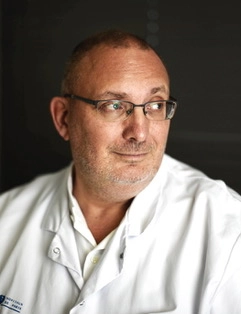
This is the context in which the study takes place Osopnee1, a research and development project led by Orikio, in partnership with the Prof. Capucine Morélot Panzini, head of the Department of Pneumology at Pitié-Salpetrière, and Prof. Thomas Similowski, professor of pneumology, Member of the Orikio Scientific Council and Director of the UMRS 1158 INSERM-Sorbonne University research unit.
Together, they share the same ambition: Fight Against the Invisibility of Respiratory Distress based on the joint contributions of the clinic, ethics and artificial intelligence.
An Artificial Intelligence That Listens to the Breath
Breathing has a unique particularity: it is the only vital function that can be heard from the outside. Fast, monotonous breathing, wheezing, gurgling, gurgling, labored breathing, or exhalation moans are all audible indications of underlying respiratory distress. These signals are easily identifiable.
Orikio's artificial intelligence is capable of automatically identifying distress situations related to specific noises in residents' rooms or at home. Based on this analysis, the system sends qualified and contextualized alerts to healthcare teams, allowing rapid and targeted interventions. A more secure, intelligent and more preventive monitoring system, for better support.
From Respiratory Alerts to the First Clinical Impacts
Listening to the recordings made in the rooms, Orikio's labelling teams identified respiratory episodes that could be worrisome. These observations have led to the creation of specific respiratory alerts, which are now integrated into the devices deployed in nursing homes, disabilities and at home.
Feedback from the field quickly highlighted their potential: some alerts led to urgent interventions, even calls to emergency services and medical transfers.
“We were able to save a resident by intervening immediately on respiratory distress. Today, there would be no going back.”
- Testimonial by Jean-Baptiste Mïs, directors of disabled establishments, Afiph Group.
This dynamic very illustrates concretely a Removal of the Invisibility of Respiratory Distress : no longer allow respiratory distress to develop without being perceived or treated.
Osopnea1: structure, analyze and demonstrate
The study Osopnee1, which started on November 3 for a period of one year, aims to scientifically assess the relevance and impact of these respiratory alerts in real conditions.
The data controller is the Association for the Development and Organisation of Research in Pulmonology and Sleep (ADOREPS), guarantor of the scientific and ethical framework of the study. Its financing is provided jointly by:
- A Grant from the Île-de-France Region, Obtained by Professor Similowski as part of the Question of Major Interest 2024 “Respiratory vulnerabilities” coordinated by Professor Marc HUMBERT;
- and by Orikio, committed to a consistent clinical research approach.
The study is part of a wider dynamic aimed at promoting research in pneumology, respiratory physiology, respiratory neurophysiology, resuscitation and sleep, as well as the dissemination of its results.
The analyses will focus in particular on the correlation between the alerts issued by Orikio and:
- The interventions carried out by the health care teams,
- therapeutic adaptations,
- possible hospitalizations,
- and the need for increased surveillance after the alert.
One Clinical Research Associate (ARC) Will analyze data before, during and after alerts, using an interface developed by Kernel-Biomedical, in order to guarantee structured, reliable and secure operation.
A major ethical and societal challenge
The removal of the invisibility of respiratory suffering is fully in line with the right to relief, first recognized for pain, then extended to all symptoms. Actively seeking and treating respiratory suffering is now an ethical imperative and a fundamental human right.
Therefore that artificial intelligence can identify respiratory distress in a person who is unable to report it, and trigger human intervention to alleviate it, is of essential public interest. As such, the Osopnée1 study is likely to benefit residents, caregivers, society and the scientific community.
Partner institutions
We warmly thank the partner institutions involved in the OSOPnée1 study:
- The Saint-Helier Foundation with the establishments of Saint-Jacut, Sainte-Marie and Rennes.
- The VYV Group with the care homes of Kerloudan, Louannec, Plouisy, Ploumagora.
- Penvenan Nursing Home
Their involvement is decisive in advancing knowledge and improving the management of respiratory distress.
Next Steps
The final ambition of Osopnée1 is to give rise to scientific publications and conference communications, in order to share the lessons of this research and to contribute to the evolution of practices.
With Osopnée1, Orikio affirmed his beliefs: Making the Invisible Visible Is Already Beginning to Relieve.


