
The hidden costs of traditional nurse call systems
Nurse call systems play an essential role in residential and long-term care, allowing residents to request assistance when needed and contributing to their day-to-day safety. Yet assessing the true cost of a system means looking beyond purchase and installation to consider its impact on residents and the day-to-day running of a care facility.
Accessibility for residents, time spent managing calls, maintenance and future upgrades are all factors that can contribute to a system's overall cost.
What if the true cost of a nurse call system went beyond its initial price tag?
Nurse call systems in long-term care: where can they fall short?
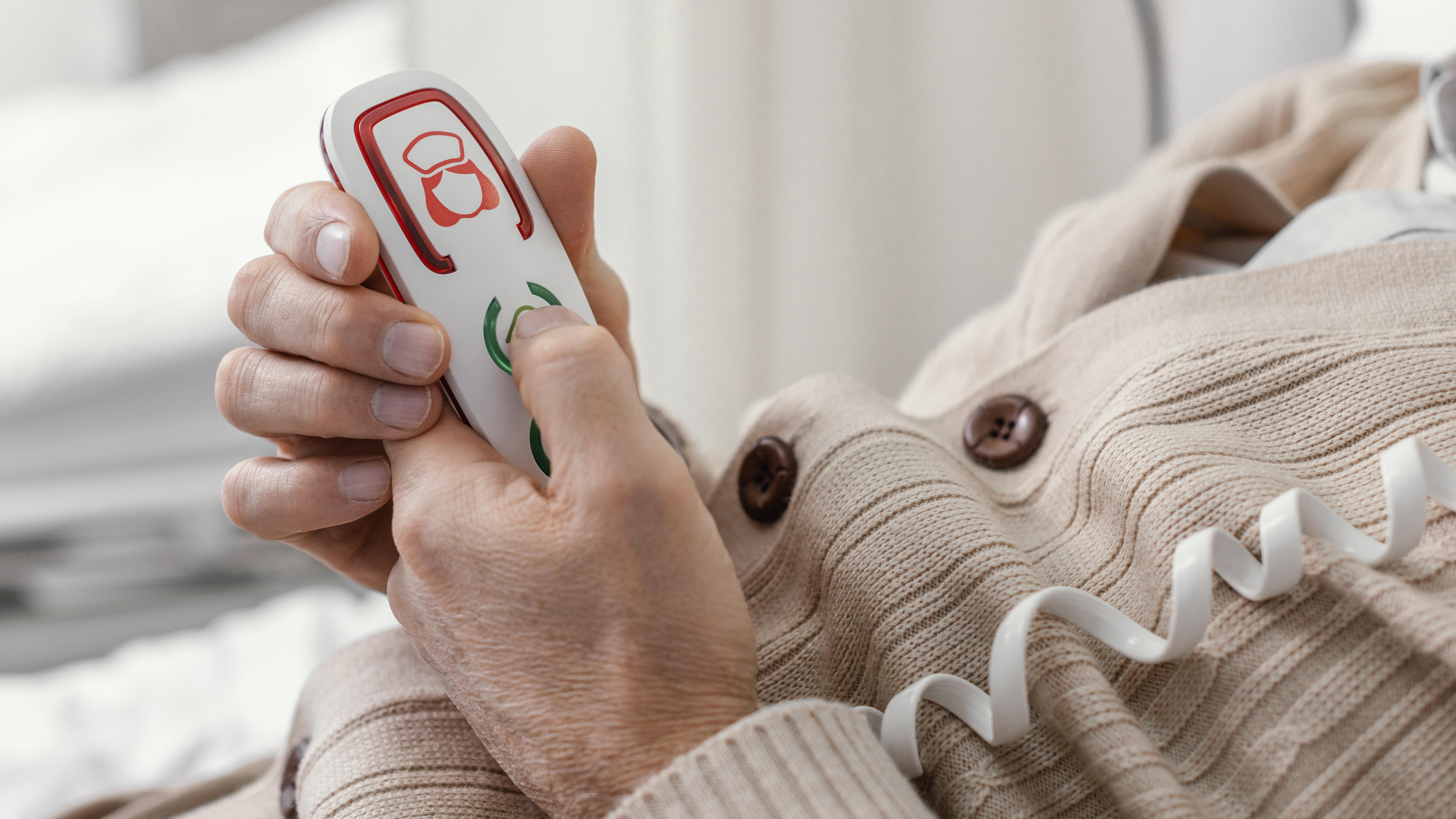
Traditional, manually activated nurse call systems rely on residents taking action: recognising that they need help, reaching the device and activating it. However, these conditions are not always met.
For residents with mobility or cognitive difficulties, a nurse call button can be difficult to use. In dedicated dementia care units, for example, some people living with Alzheimer's disease may struggle to recognise a risk or communicate their need for assistance.
The same difficulty can arise outside these units. A resident who suddenly becomes unwell or experiences a fall may be unable to activate their nurse call system, particularly if they are out of reach of the call button.
A manually activated nurse call system can only raise an alert when the resident is able to trigger it. In long-term care settings, however, the absence of a call does not necessarily mean that no help is needed.
Shouting, calls for help or unusual sounds may indicate a situation requiring staff intervention, even when no nurse call has been activated.
When no call is made, certain situations can be harder to identify between staff rounds. The challenge is therefore to recognise potential risks even when no alert has been actively triggered.
Managing alerts: what are the operational implications for care teams?
Depending on the system's features, an alert may not immediately indicate what the resident needs or how urgent the situation is. Staff may therefore need to visit the resident to assess what is happening.
When several alerts come in at once, this lack of context can make it harder to prioritise responses.
Over time, these additional checks can place a significant demand on care teams' already busy schedules.
Care teams must balance residents' requests, scheduled care and unexpected events. Alerts with limited contextual information can make these decisions more difficult.
Additional information could help teams determine how best to respond, without replacing care professionals' assessment and judgement.
Traditional nurse call systems: costs beyond installation
Beyond the purchase price, the overall cost of a nurse call system includes the resources needed to operate, maintain and upgrade it over time.
Depending on the layout of the facility and the system selected, installation may require cabling, specialist equipment or other technical adaptations. Costs also vary according to the number of rooms and the characteristics of the installation.
Like most technical equipment, nurse call systems require regular maintenance and may incur repair or replacement costs.
Newer solutions now offer different deployment options, which may make it easier to upgrade existing equipment without requiring a complete overhaul of a facility's infrastructure.
Beyond the price tag: what are the day-to-day implications?

When an alert does not immediately indicate the nature of a situation, staff may need to carry out additional checks, making it harder to prioritise responses, particularly when several requests come in at once. This adds to care teams' existing responsibilities.
For residents who cannot activate a call, the challenge is different but equally important: depending on the monitoring arrangements in place, some situations may take longer to identify. Beyond the implications for care, this can also affect residents' sense of security and their families' peace of mind.
Together, these challenges highlight two essential needs: identifying certain situations without requiring residents to raise an alert themselves, and providing care teams with useful information to guide their response.
Orikio: a different approach to alerts in long-term care
To help address these challenges, Orikio offers a different approach to monitoring in care settings, using AI-powered acoustic analysis.
Identify situations without waiting for a resident to call for help. Orikio recognises more than 150 categories of sound, including acoustic signals that may indicate a situation requiring staff intervention. Calls for help, groans or unusual impact sounds can trigger alerts, even when a resident is unable to use their nurse call system.
Provide more context to help guide responses. By identifying the type of sound detected, Orikio's alerts provide care teams with valuable context to better understand what may be happening and help prioritise their response, without replacing their professional judgement.

This approach broadens the options for monitoring and supporting residents, particularly those with mobility or cognitive difficulties, while respecting their autonomy and privacy.
Can Orikio replace traditional nurse call systems?
Orikio can be deployed alongside an existing nurse call system or, where appropriate, replace it entirely. Some long-term care facilities in France have already chosen to make this transition.
Replacing an established system, however, goes beyond choosing new technology. The priority is to ensure that residents' safety needs are met and that care teams have effective ways to identify and respond to situations requiring assistance.
The right approach depends on each facility's needs, care model and applicable regulatory requirements. As these requirements vary between countries, any replacement should be assessed within its local context.
Beyond its initial cost, an alert system should also be assessed in terms of how it is used day to day, how well it meets residents' needs and how effectively it fits into care teams' workflows.
Ultimately, the right solution is one that meets residents' needs, supports their safety and helps care teams make more informed decisions about how to respond.

